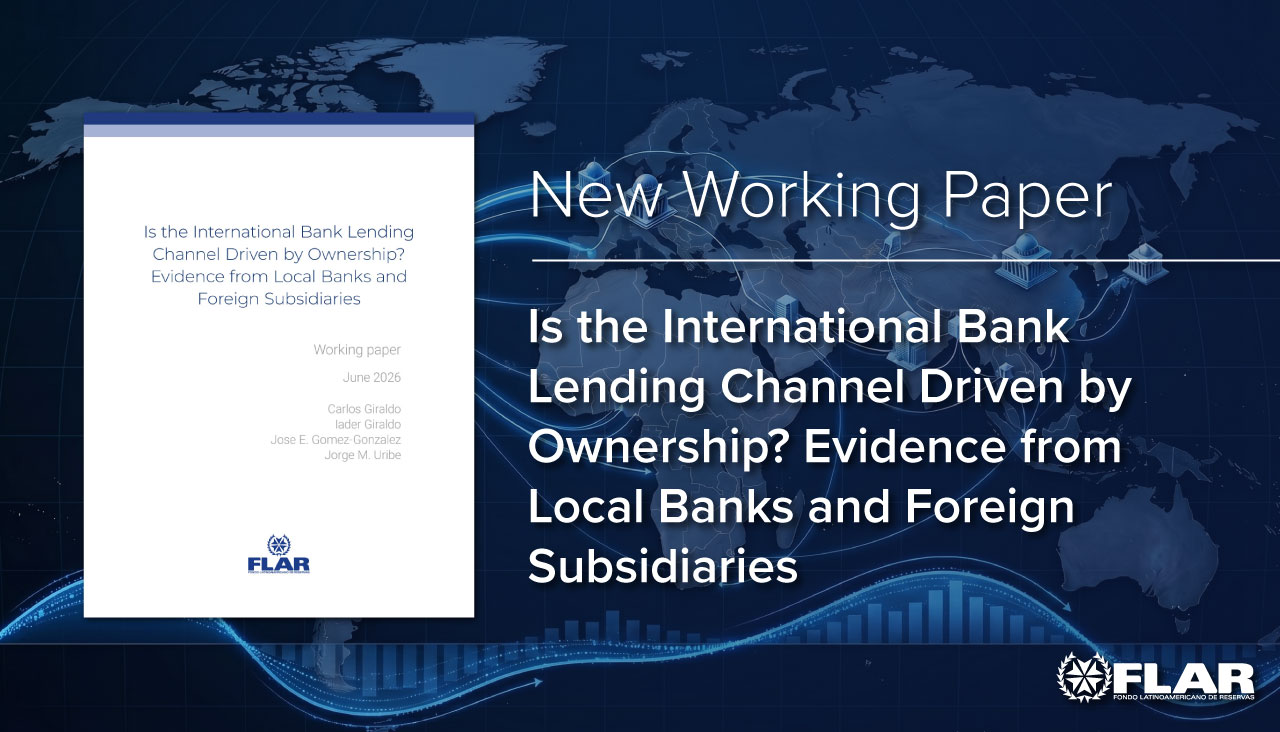
New Working Paper FLAR Is the International Bank Lending Channel Driven by Ownership? Evidence from Local Banks and Foreign Subsidiaries Carlos Giraldo, Iader Giraldo, Jose E. Gomez-Gonzalez, Jorge M. Uribe June 2026 Read Working Paper

This sub content title section you can add you real content.

New Working Paper FLAR Is the International Bank Lending Channel Driven by Ownership? Evidence from Local Banks and Foreign Subsidiaries Carlos Giraldo, Iader Giraldo, Jose E. Gomez-Gonzalez, Jorge M. Uribe June 2026 Read Working Paper

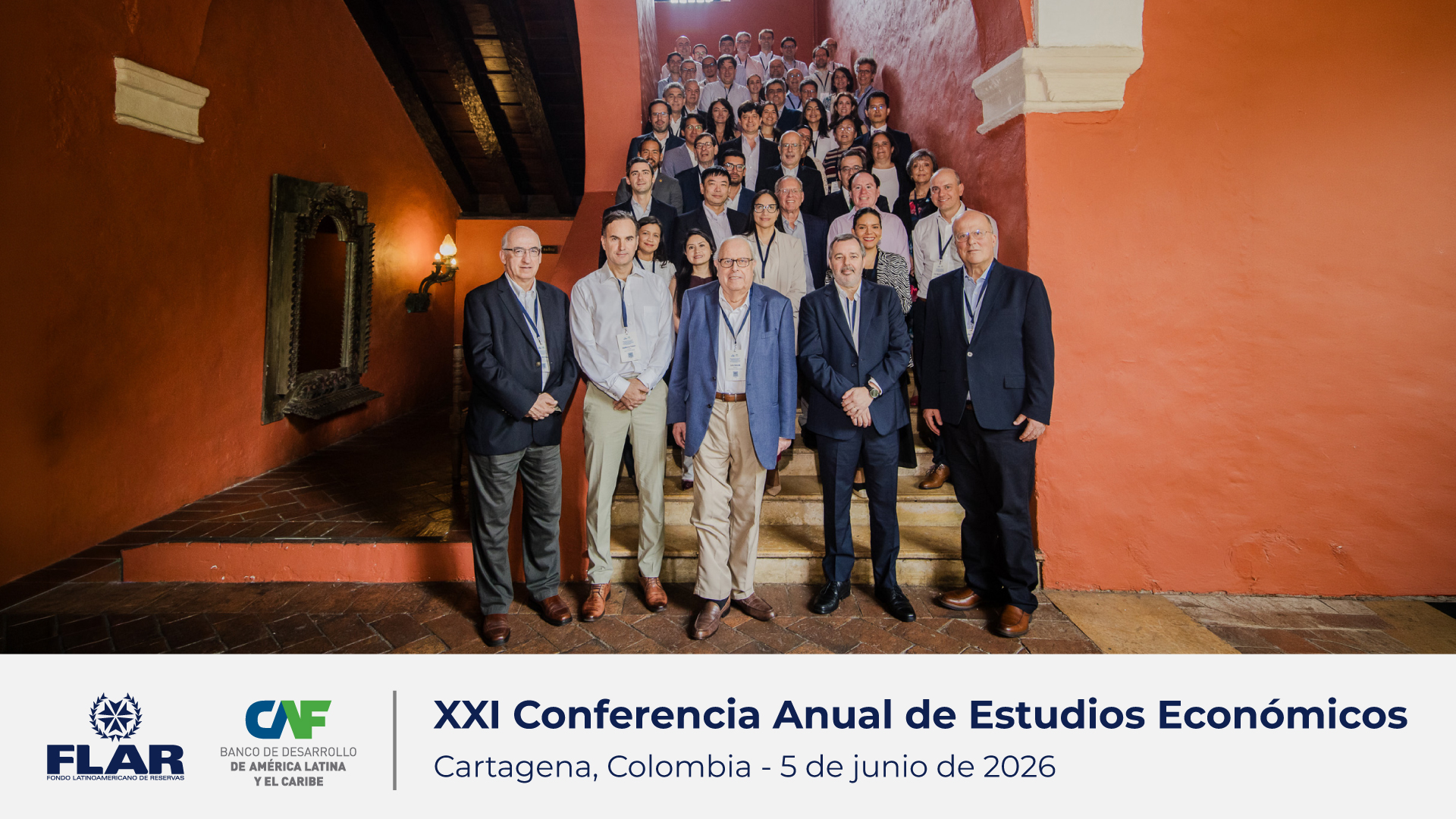
Press release Press Release: FLAR Celebrates the XXI Annual Economic Studies Conference in Cartagena Fiscal-Monetary Interactions and Macro-Financial Vulnerabilities in a Fragmenting World See press release

Press release FLAR Board of Directors Re-elects José Darío Uribe as Executive President for the 2026–2029 Term See press release

Carlos Giraldo, Iader Giraldo, Jose E. Gomez-Gonzalez, and Jorge M. Uribe have published the study “Bank capital adjustment to public debt shocks: The role of institutions in emerging markets”, which examines how public debt shocks affect banks’ capital ratios and how these responses vary depending on institutional and regulatory quality across countries. The findings highlight the importance of strong regulatory frameworks in supporting financial stability, particularly in emerging markets.

FLAR and ASEAN+3 Macroeconomic Research Office reaffirm their commitment to strengthening global resilience through closer inter-regional cooperation, highlighting the importance of macroeconomic surveillance and financial connectivity for a more stable and inclusive system.

We are pleased to share a new publication in the academic journal International Journal of Energy Economics and Policy, entitled “Determinants of Financial Hedging Strategies among Commodity Producer Firms in Latin America”, authored by Carlos Giraldo, Iader Giraldo, Cristian Huertas, and Juan Camilo Sánchez.

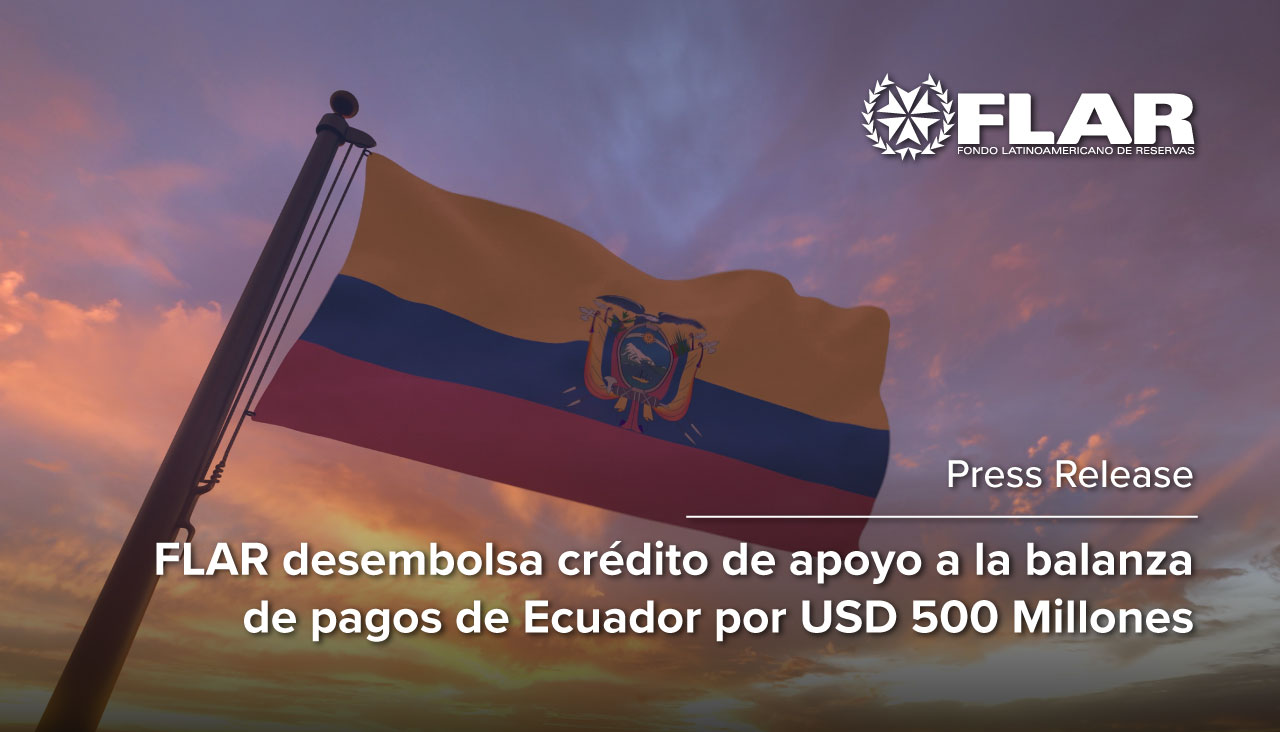
El pasado 23 de diciembre de 2025, el FLAR realizó el desembolso de un crédito de apoyo a la balanza de pagos de Ecuador por USD 500 millones, aprobado por su Directorio en la reunión ordinaria CXIV.

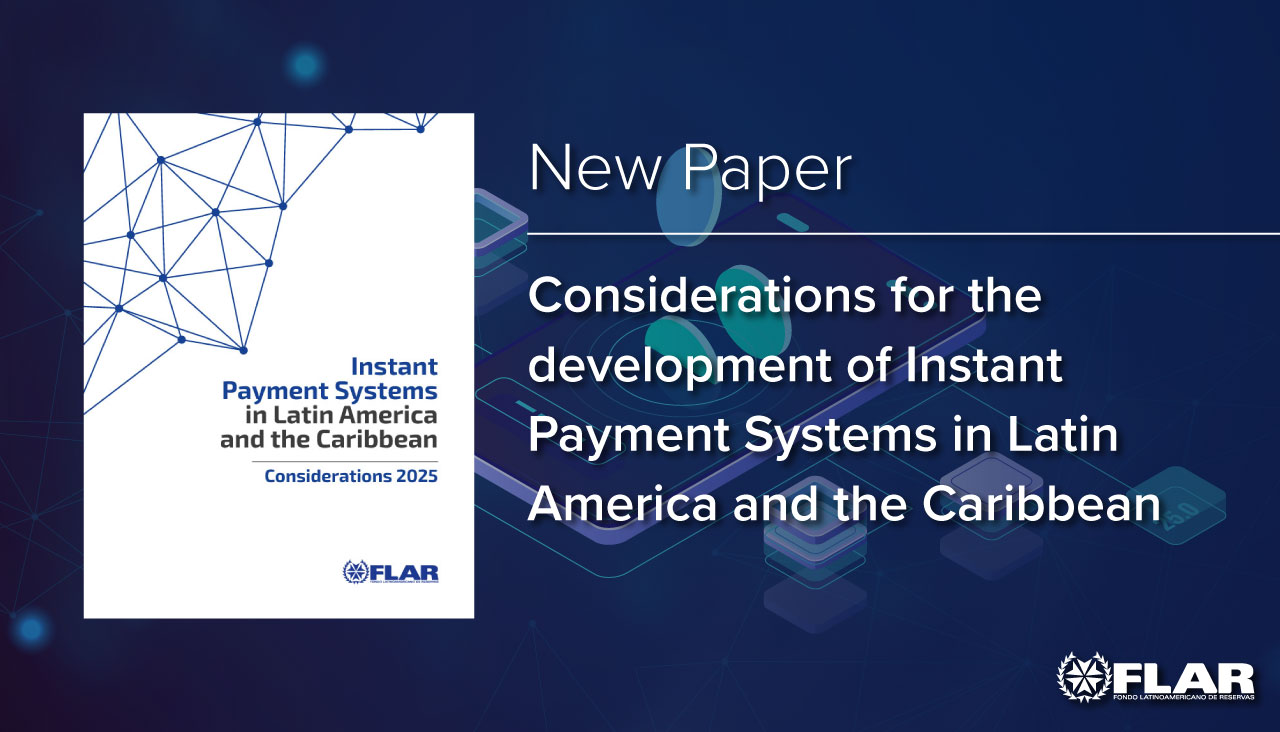
The rise of digitalization has transformed financial systems through the adoption of instant payment systems (IPS), which enable real-time fund transfers and promote efficiency and financial inclusion. In Latin America and the Caribbean, the development of these systems varies across countries due to regulatory and technological challenges. To strengthen them, FLAR promotes cooperation among central banks and has developed a regional technical guide outlining key challenges, opportunities, and strategic guidelines to foster greater interoperability and financial integration in the region.

The determinants of the price-to-income (PTI) ratio in urban real estate markets have been extensively examined in the literature (e.g., Himmelberg et al., 2005; Duprey & Klaus, 2022; Kuebler & Rugh, 2013; André et al., 2014; Pavlidis et al., 2016; Wu et al., 2012). Most studies focus on issues related to credit conditions and systemic risk, treating the PTI ratio primarily as a measure of housing affordability.

Understanding the cyclical movements of macro-financial variables, such as credit, is relevant not only to identify whether the financial sector is experiencing overheating, but also to design macroprudential measures aimed at preventing extreme fluctuations in the financial cycle. In this study, we focus on measuring the cyclical changes of different credit indicators—both in logarithmic terms and as ratios to GDP—as well as by type of credit and currency.